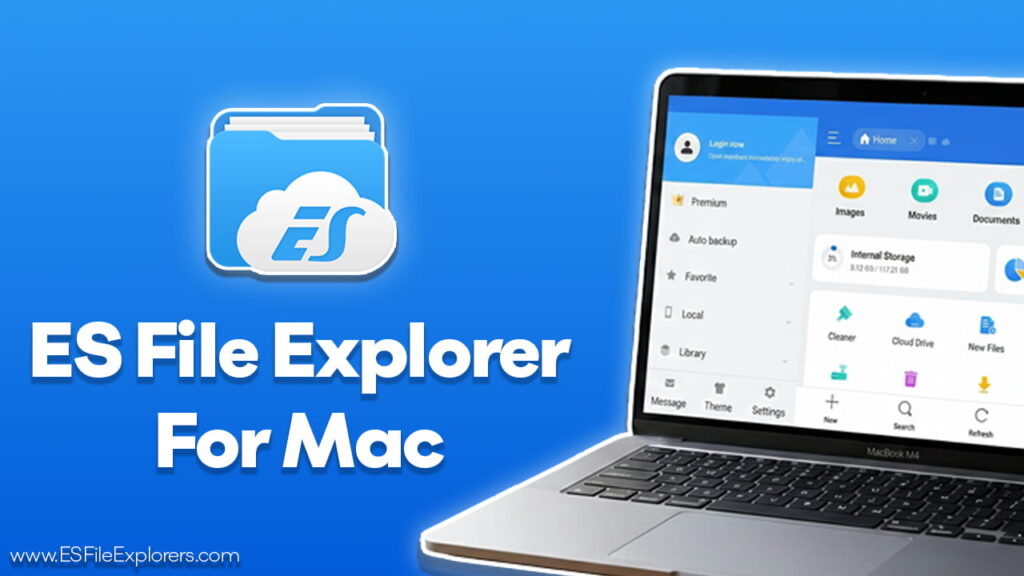
ES File Explorer for Mac brings a familiar file manager style to macOS. Many users already know Finder. However, some tasks still take extra steps in Finder. So, this helps with common jobs that need more tools in one place. It can handle local files, cloud files, and network files. As a result, file work feels more organized across devices.
Instead of switching between many apps, ES File Explorer for Mac keeps key options together. For example, it can help manage archives, move files between services, and connect to other devices on a network. Also, it can help reduce the time spent on repeated file actions. Therefore, it fits users who work with many folders and many file types.
Can ES File Explorer for Mac Run on macOS?
ES File Explorer for Mac can run on macOS. Over time, macOS added more app options and better support for mobile apps. Because of that, this can be used in more than one way. So, different Mac models can still access the app.
Two main paths exist for installation. One path uses a Mac-focused version. The other path uses iPhone and iPad app support on newer Macs. Next, each method is explained in a clear way.
Option 1: Native macOS App Version
Some users prefer a direct desktop build. In that case, ES File Explorer for Mac may be installed as a macOS app version from the App Store. This option focuses on desktop needs. So, it supports local file sorting, folder actions, and archive tasks.
Also, this path avoids extra setup steps. For example, there is no need to configure an emulator. Therefore, general users can start quickly and keep the workflow simple. this can then act as an extra file tool beside Finder.
Option 2: Apple Silicon Support for iPhone and iPad Apps
Newer Macs use Apple Silicon chips like M1, M2, and M3. These Macs can run many iPhone and iPad apps from the App Store. So, ES File Explorer for Mac can also be used through the iOS app version on these devices.
This option can unlock more mobile-focused tools. For instance, some builds include network features and media tools that many users know from mobile use. Also, the app runs in a window that fits the macOS desktop. As a result, this can support both desktop and mobile-style features on newer hardware.
ES File Explorer for Mac Features
ES File Explorer for Mac includes tools that go beyond basic folder browsing. Finder can manage local files well. However, many users still need extra support for cloud, archives, and network transfers. So, this focuses on these areas.
Below are the main feature groups. Each one helps with a common file problem. Also, each one aims to reduce extra apps in the workflow.
Cloud Storage Links in One Place
Many users store files across more than one cloud service. Usually, that means switching websites or separate apps. However, ES File Explorer for Mac can place cloud accounts into a single view. So, cloud folders appear inside the same file manager layout.
Common services include Google Drive, Dropbox, OneDrive, and Box. After login, these services show up like regular folders inside this app. Then, files can be moved by drag and drop between accounts. Also, it helps reduce repeated downloads and re-uploads. Therefore, cloud work becomes easier to track across services.
Archive Support for More File Types
macOS can open ZIP files without extra tools. However, other formats can cause trouble. For example, RAR and 7Z files often need a separate unarchiver app. So, ES File Explorer for Mac includes built-in archive tools.
This app can compress and extract files in common formats like ZIP, RAR, and 7Z. Then, archives can be handled right inside the file view. Also, this reduces the need for extra apps for basic archive work. As a result, archive tasks stay close to normal folder actions.
Network File Transfer Over Wi-Fi
Cables do not always feel convenient. Also, some devices do not share ports. So, wireless transfer tools matter for daily work. ES File Explorer for Mac supports network options that help move files across the same Wi-Fi network.
Supported methods can include FTP, SFTP, and WebDAV. With these, this app can connect to shared folders on a Windows PC. It can also connect to a NAS drive. Then, files can be copied without moving hardware around. Therefore, home and office networks become part of the file workflow.
Why Use ES File Explorer for Mac Alongside Finder?
Finder works well for many simple tasks. However, users often want more control in one window. So, ES File Explorer for Mac can support tasks that normally require extra tools.
For example, cloud accounts can appear in the same view as local folders. Also, archives can be opened without switching apps. In addition, network paths can be saved for faster access later. Therefore, this app can reduce the number of steps needed for repeated file jobs.
How to Install ES File Explorer for Mac
Installation steps depend on the Mac type. Apple Silicon models can use iPhone and iPad app listings. Intel models often use the Mac app listing. So, the steps below cover both paths clearly.
Install Steps for Apple Silicon Macs (M1, M2, M3)
Start with the Mac App Store. Then, search for ES File Explorer for Mac. Next, switch the filter to show iPhone & iPad Apps. After that, pick the official app listing and download it.
Once installed, open the app from Applications or Launchpad. The app will run in a window that fits macOS. Also, the app can be pinned to the Dock for faster access. Therefore, daily file actions can start with one click.
Install Steps for Intel Macs
Intel Macs should check the standard Mac App Store results. In many cases, the macOS version appears in the normal listings. Then, download and install like any other Mac app.
Some users may still need an Android-style setup for specific Android-only screens. In that case, an Android emulator can run APK apps. For example, BlueStacks is one option for that type of setup. However, the native Mac app path often stays simpler. So, ES File Explorer for Mac works best when installed directly, when available.
Advanced Tip: Connect Android to Mac with Remote Manager
Moving files from Android to Mac can feel slow with cables. Also, Bluetooth transfers often take more time. So, the users often use a wireless method. A common method uses the Remote Manager feature in the Android app.
First, open the ES File Explorer app on the Android device. Then, enable the option often named “View on PC” or “Remote Manager.” After that, the phone creates an FTP address, such as ftp://192.168.1.5:3721. Next, enter that address into ES File Explorer for Mac as a network location. In some cases, Finder can also use the same address. As a result, the phone storage becomes reachable over Wi-Fi.
This method supports read and write access when settings allow it. So, photos, documents, and folders can move faster. Also, the workflow avoids searching for cables. Therefore, this app helps bridge Android and macOS in a simple way.
Summary
ES File Explorer for Mac helps manage files across local storage, cloud storage, and network storage. It can place cloud services in one view. Also, it can open common archive formats like ZIP, RAR, and 7Z. In addition, it can connect to FTP, SFTP, and WebDAV shares on a network.
Because of these tools, this can support users who handle many file sources each day. It can also help connect an Android phone to a Mac over Wi-Fi using Remote Manager. Therefore, ES File Explorer for Mac fits modern file workflows that move across devices and platforms.